

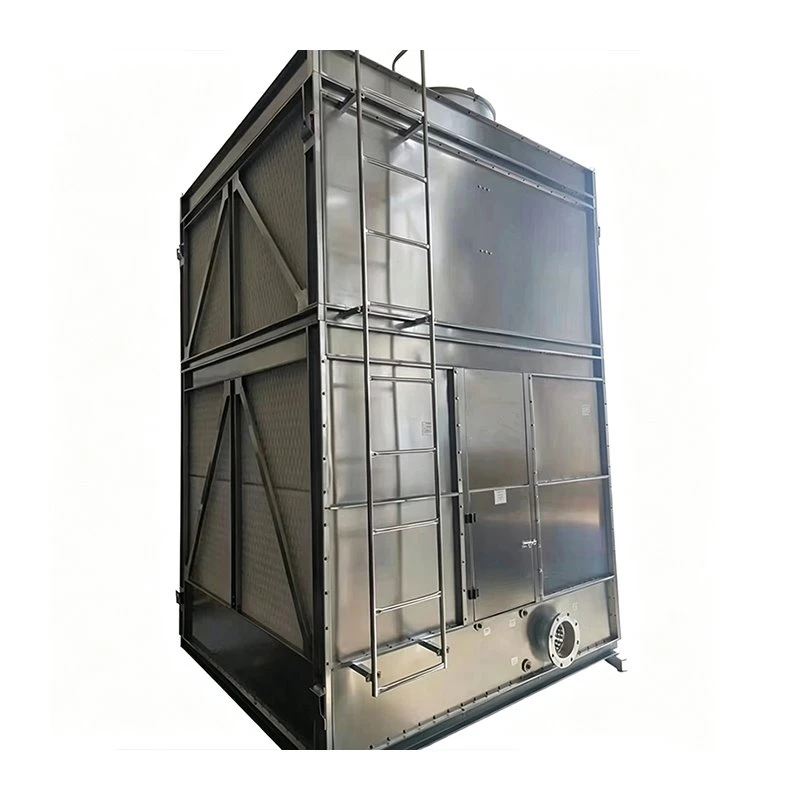
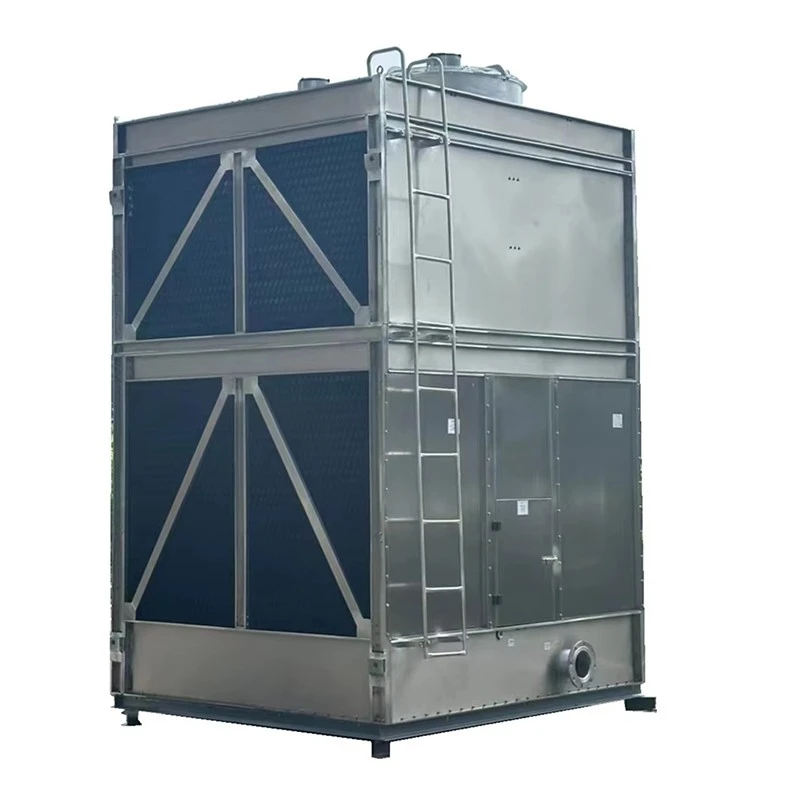
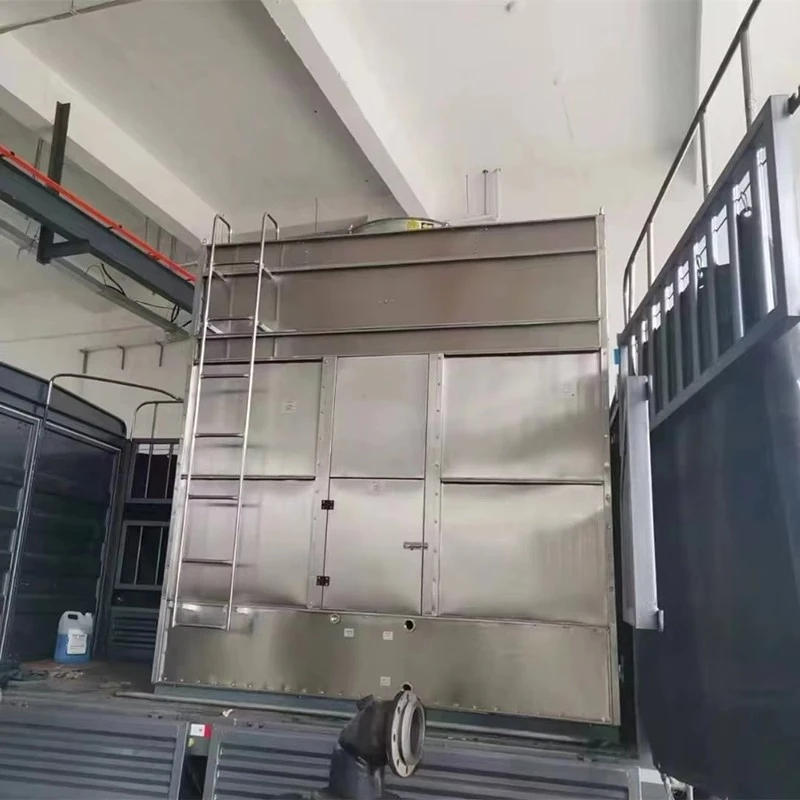
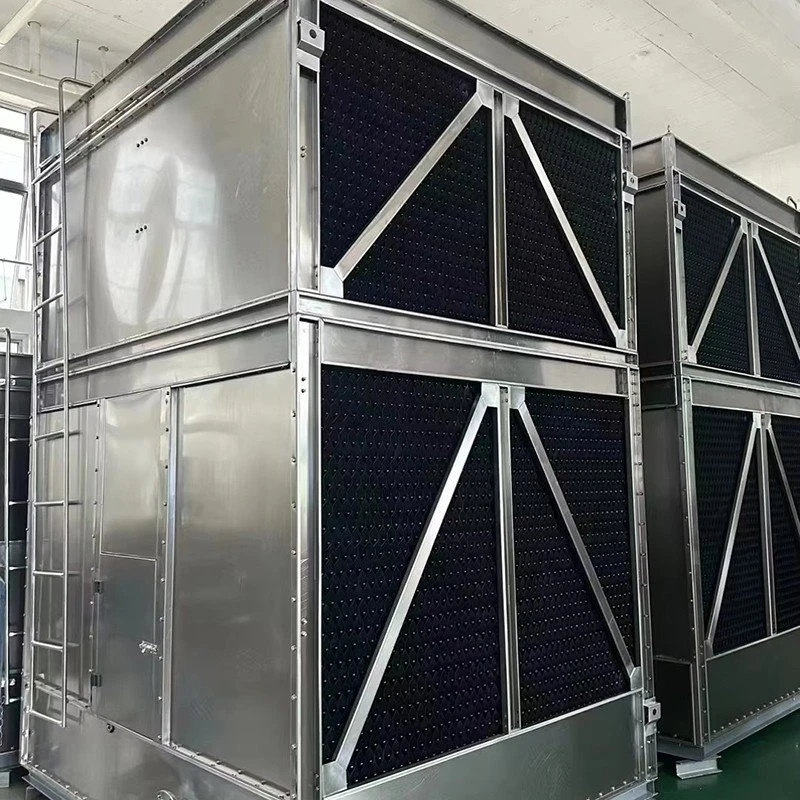
Hangzhou Sino-cold Sci-tech Co., Ltd. is one of the most reliable manufacturers and suppliers of evaporative condenser coil in China. With abundant experience, we are committed to providing high quality custom service for global clients. Welcome to wholesale premium evaporative condenser coil at competitive price from our factory.
Core principles and functional positioning
Evap condenser uses water and air as cooling media, relying on spray water evaporation to absorb latent heat of vaporization and take away the condensation heat of refrigerant (or process fluid), cooling and condensing the high-temperature gaseous medium inside the coil into liquid state. Essentially, it integrates the condenser, cooling tower, and circulating water pump into one. Compared with the traditional combination of "water-cooled condenser+open cooling tower", the energy-saving and water-saving effects are more prominent.
Core structure composition
It mainly consists of five parts:
Heat exchange coil
The core heat evap condenser, commonly made of carbon steel hot-dip galvanized, aluminum alloy, stainless steel materials, different materials are suitable for different working conditions, pressures, and corrosive environments
01
Spray system
Including water pump and spray nozzle, evenly spraying the cooling water from the collection tank onto the outer surface of the coil to form a water film
02
Air supply system
Dedicated axial flow fan drives air to flow through the coil, promoting moisture evaporation and heat generation, while discharging humid air
03
Water collection tank and replenishment system
Collect unevaporated cooling water for recycling, and the float valve automatically controls the replenishment of water lost due to evaporation
04
Dehydrator (water collector)
Intercepts water droplets carried in humid air, reduces cooling water loss and lowers water consumption.
05
1. Working principle: the core of efficient heat exchange
The evaporative condenser coil highly combines heat and mass transfer. The high-temperature and high-pressure gaseous refrigerant flows inside the tube, and is covered with a thin water film by a spray system outside the tube. The forced convection of air causes a very small amount of spray water to evaporate. Utilizing the extremely high latent heat of vaporization of water (approximately 2440 kJ/kg) to remove a large amount of heat and condense the medium inside the tube. Among them, latent heat transfer accounts for more than 70%~80% of the total heat transfer, so its heat transfer efficiency is much higher than that of ordinary air-cooled or water-cooled heat exchangers.
2. Classification of pipe cross-sectional shapes
Elliptical Tube: Low wind resistance, compact flow channel, less prone to scaling and dry areas on the outer wall, and large heat transfer area. But it faces higher requirements in terms of pressure and processing technology.
Round Tube: With stable structure, strong pressure bearing capacity, and mature technology, it is currently the most common choice.
Finned Tube: Operating in dry or mixed mode without water, used for winter antifreeze or extremely water scarce areas.
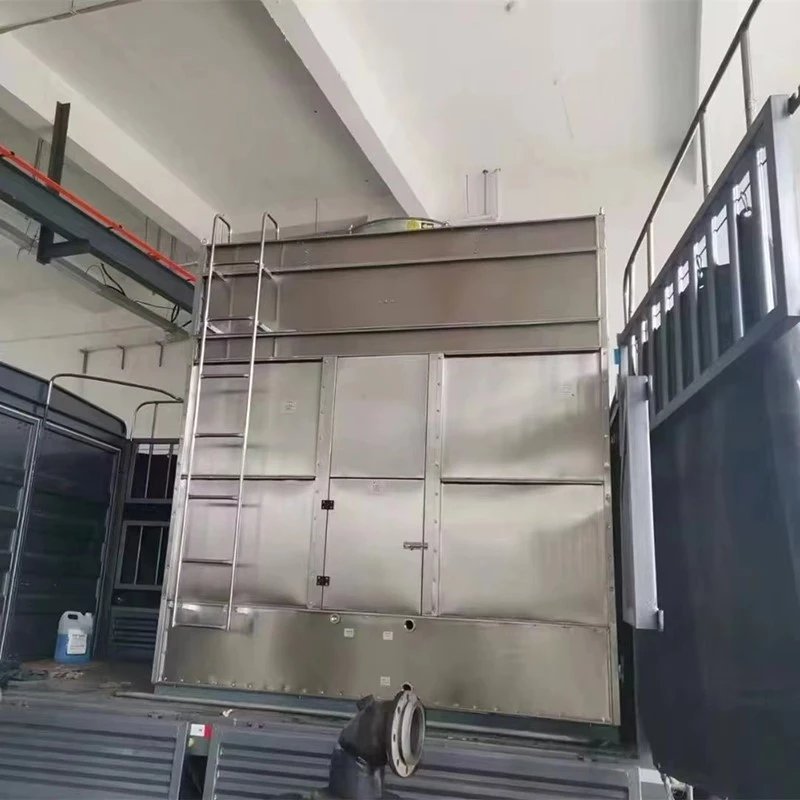
3. Common materials and anti-corrosion surface treatment
Hot dip Galvanized Carbon Steel: After welding and assembly, the entire body is immersed in molten zinc solution at about 450 ℃, and the galvanized thickness is usually ≥ 80 μ m. Corrosion resistance and moderate cost are standard configurations for industrial ammonia systems.
Stainless steel coil (304/316L): used in highly corrosive environments or harsh water quality, without the need for regular replacement due to coating loss. The service life is extremely long, but the cost is 2-3 times that of carbon steel.
Copper Aluminum Fin Coil: With excellent heat transfer efficiency, it is mainly used in Freon systems and commercial HVAC systems. Note: Copper material is absolutely not suitable for ammonia refrigeration systems.
4. Core design and operation parameters
Design and test pressure: The design pressure is usually between 2.0 MPa and 2.5 MPa
The pressure for the airtightness test should reach 2.8 MPa to 3.5 MPa.
Factory nitrogen pressure maintenance: Qualified products will be filled with dry nitrogen gas ranging from approximately 100 kPa to 150 kPa when leaving the factory. This not only prevents rust, but also visually verifies whether there is a leak during transportation through exhaust sound when opening.
Water quality management pH control: Hot dip galvanized materials are extremely sensitive to acidity and alkalinity, and the pH value of circulating water needs to be strictly controlled between 7.0 and 8.2.
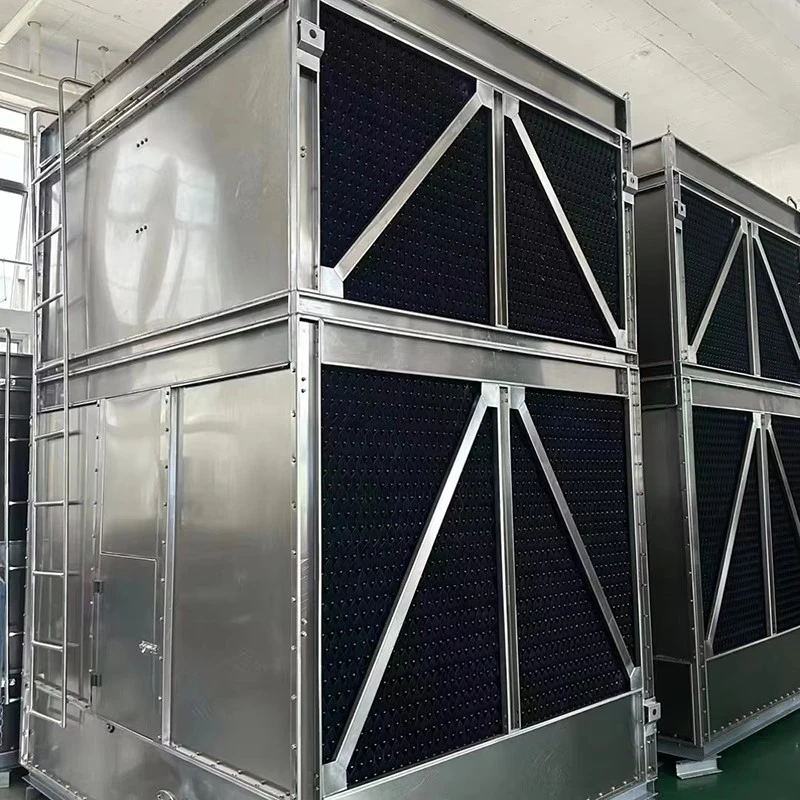
Hot Tags: evaporative condenser coil, China evaporative condenser coil manufacturers, suppliers, factory


