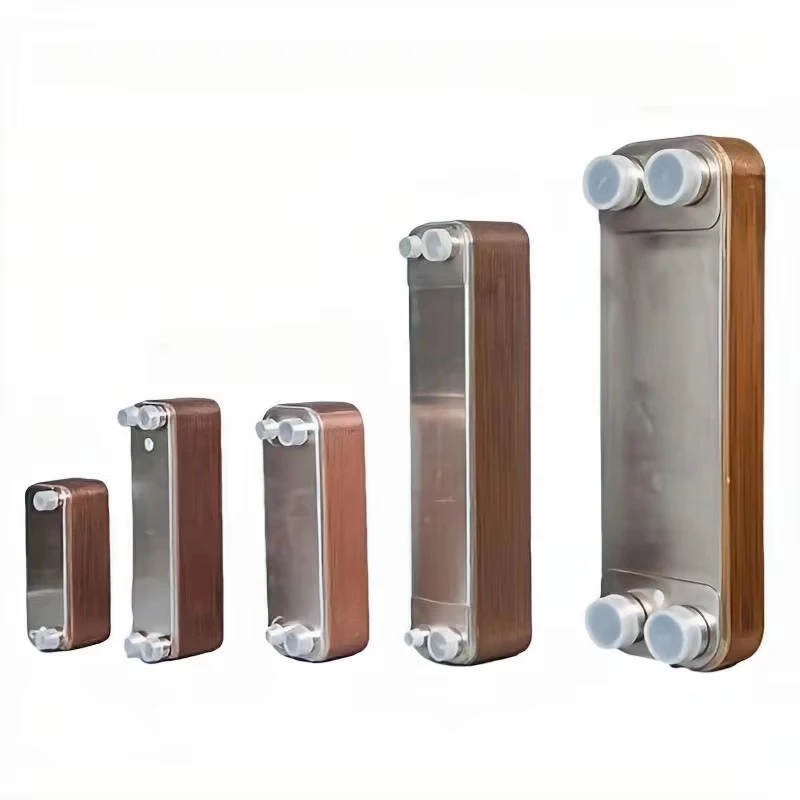
Volumetric heat exchangers mainly consist of a water storage tank (shell), heat exchange coils (or tube bundles), tube box, heat medium inlet and outlet, hot and cold water inlet and outlet, and safety control and monitoring instruments such as safety valves, thermometers, pressure gauges, and temperature regulators.
From an external perspective, they can be mainly divided into vertical and horizontal volumetric heat exchangers. Based on the nature of the heat medium, they can be divided into steam-water type heat exchangers using steam as the heat medium and water-water type heat exchangers using high-temperature water as the heat medium. According to their internal structure and technological evolution, they can be divided into traditional volumetric, flow-guided (Generation I), semi-volumetric (Generation II), and floating coil (Generation III) types.
Among them, semi-volumetric heat exchangers adopt a modular design of "rapid heat exchange + independent storage tank." Their heat exchange tube bundles include a cylindrical body, which differs from the structure of traditional volumetric heat exchangers, resulting in a difference in the ratio of water supply to water storage for the same volume. Floating coil heat exchangers utilize the high-frequency vibration of the coils in the fluid to enhance heat transfer and possess self-cleaning capabilities. In addition, depending on their specific structural form, volumetric heat exchangers also include various types such as U-tube type, spiral type, shell type, and extrusion type.